The day Bollywood had two heartbeats
Guest Column: Dr. Sandeep Goyal writes that Lagaan and Gadar, despite their differences, both became blockbusters, reflecting two Indias
 by
Published: Oct 28, 2026 9:11 AM | 5 min read
 Follow Us

- **25th Anniversary of Blockbusters**: The article reflects on the 25th anniversary of two iconic Hindi films, *Lagaan* and *Gadar*, which were released on the same day, June 15, 2001, marking a significant moment in Indian cinema.
- **Contrasting Themes and Styles**: *Lagaan*, directed by Ashutosh Gowariker, is described as a cerebral film focused on British imperialism and cricket, while *Gadar*, directed by Anil Sharma, is characterized as a visceral love story set against the backdrop of Partition, showcasing intense emotions and nationalism.
- **Box Office Success**: Both films achieved blockbuster status, appealing to different audiences; *Lagaan* resonated with urban viewers and was nominated for an Oscar, while *Gadar* became a cultural phenomenon in rural areas, particularly in Punjab, where it addressed Partition trauma.
- **Musical and Performative Elements**: The music of both films played a crucial role in their success, with *Lagaan* featuring classical compositions by A.R. Rahman and *Gadar* offering nostalgic melodies by Uttam Singh. The performances of Aamir Khan and Sunny Deol are highlighted, along with the significant roles of Gracy Singh and Ameesha Patel, showcasing their impact in a male-dominated narrative.
25 years of Lagaan and Gadar - Chalk and Cheese, and yet, two blockbusters.
I found this neatly folded poster while cleaning up our library over the weekend. A poster that reminded me of a day mid-June 25 years ago.
25 years since a trade pundit in Mumbai famously told me, "One will eat the other alive. There is no room for two." I was then Group CEO of Zee. And we had just launched a film that had taken 3 years to make. Gadar.
June 15, 2001. Lagaan and Gadar - Ek Prem Katha - released on the same Friday.
It was the biggest clash Hindi cinema had ever seen. And the most lopsided. On paper.
On one side was Aamir Khan, coming off a 4-year hiatus, with a 4-hour film, in Awadhi, subtitled in English, about British imperialism and cricket, directed by Ashutosh Gowariker, whose last film was a flop. No heroine, no Switzerland, no action. Just villagers with dhols and drought.
On the other side was Sunny Deol, the original 2.5 kg ka haath, with a Partition love story where he uproots a handpump, directed by Anil Sharma, with Ameesha Patel, who was just one film old.
Chalk and cheese. City and small town. White and blood-red.
We all know what happened next.
Both became blockbusters. Not hits. Blockbusters.
Because India is both. India is Lagaan and Gadar.
The Great Divide
Lagaan was a cerebral film. It was slow, it was stubborn, it was almost arrogant in its ambition. It asked an audience weaned on Kaho Naa... Pyaar Hai to watch a bunch of farmers learn cricket to defeat the British. It was about India vs the Empire.
Gadar was visceral. It didn't ask, it punched. It was about India vs Pakistan, Hindu vs Muslim, husband vs a nation. It was raw, melodramatic, high-pitched, and it wore its heart not on its sleeve but on its forehead, with sindoor.
Lagaan was nominated for the Oscars. Gadar was nominated in every single-hearted household in Punjab.
And that was the box-office story of that summer.
I remember calling a friend who ran a theatre in Jalandhar. He said, "Sandeep, we are running 24-hour shows. 6 am, 9 am, 12 noon, 3 pm, 6 pm, 9 pm, 12 midnight. All housefull. People are coming in tractors."
In Punjab, Haryana, UP, Rajasthan, Gadar was not a film. It was a catharsis. People whistled when Sunny uprooted that handpump, they cried when Tara Singh crossed the border for his family. It was their story, their Partition trauma, on screen.
In the same week, in Mumbai, Delhi, Bangalore, Chennai - Lagaan was playing to 100% in multiplexes. The same multiplex audience that would, a year later, make Dil Chahta Hai a cult, stood up and clapped when Bhuvan hit that final six. It was their story, their underdog, make-the-white-man-lose story.
Same day. Two Indias. Two full houses.
The Music That Held It Together
Neither film would have been what it was without its music. And here too, they were opposites.
A.R. Rahman's Lagaan was classical, layered, rooted. Ghanan Ghanan, Mitwa, Radha Kaise Na Jale, O Paalanhaare. It sounded like the earth. It made you feel the drought before the rain.
Uttam Singh's Gadar, with Anand Bakshi's lyrics, was pure nostalgia and pure melody. Ghar Aaja Pardesi, Udja Kale Kawan, Main Nikla Gaddi Leke. It sounded like a memory you had never lived, but your parents had. Every song was a super-hit before the film released. On every truck, every bus, every wedding.
One score made you hum thoughtfully. The other made you sing loudly.
The Actors Who Made Us Believe
Of course, this column would be incomplete without the four.
Aamir Khan as Bhuvan and Sunny Deol as Tara Singh gave two of the greatest male performances of that decade. Aamir - internal, restrained, the eyes doing the talking, carrying a 4-hour film on sheer belief. Sunny - external, explosive, a man whose love is so large it becomes physically powerful.
But we forget the women because the men were so loud.
Gracy Singh as Gauri was not a prop. She was the moral centre of Champaner. Shy, strong, heartbroken, and she held her own against a British officer and a superstar without raising her voice.
And Ameesha Patel as Sakeena - what a debut. In a film full of shouting men, she was fragile and fierce. When she says, "If I was not Sakina, I would have said, I am a Hindustani's daughter, not a Muslim's wife," you believed Partition.
Both women were new, both were dismissed as "lucky," both proved they were anything but.
25 years later, we still talk about Lagaan vs Gadar. Who won? The answer is, we did. We all did.
On a single day, Hindi cinema proved it could make a film that the Academy in Los Angeles would respect, and a film that a farmer in Amritsar would watch four times at 3 in the morning.
Chalk and cheese? Yes. But both wrote history.
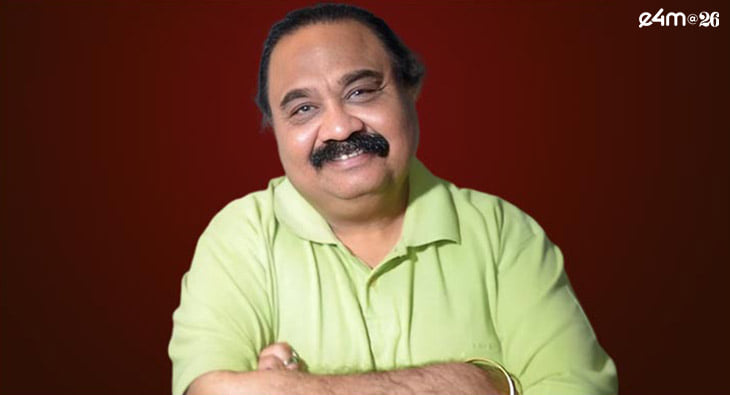
Dr. Sandeep Goyal was Group CEO of Zee Telefilms in 2001 when Zee released the movie Gadar
Read more news about Digital Media, Television Media, Out of Home Advertising, Print Media, Latest Advertising India
For more updates, be socially connected with us onInstagram, LinkedIn, Twitter, Facebook, YouTube & Google News